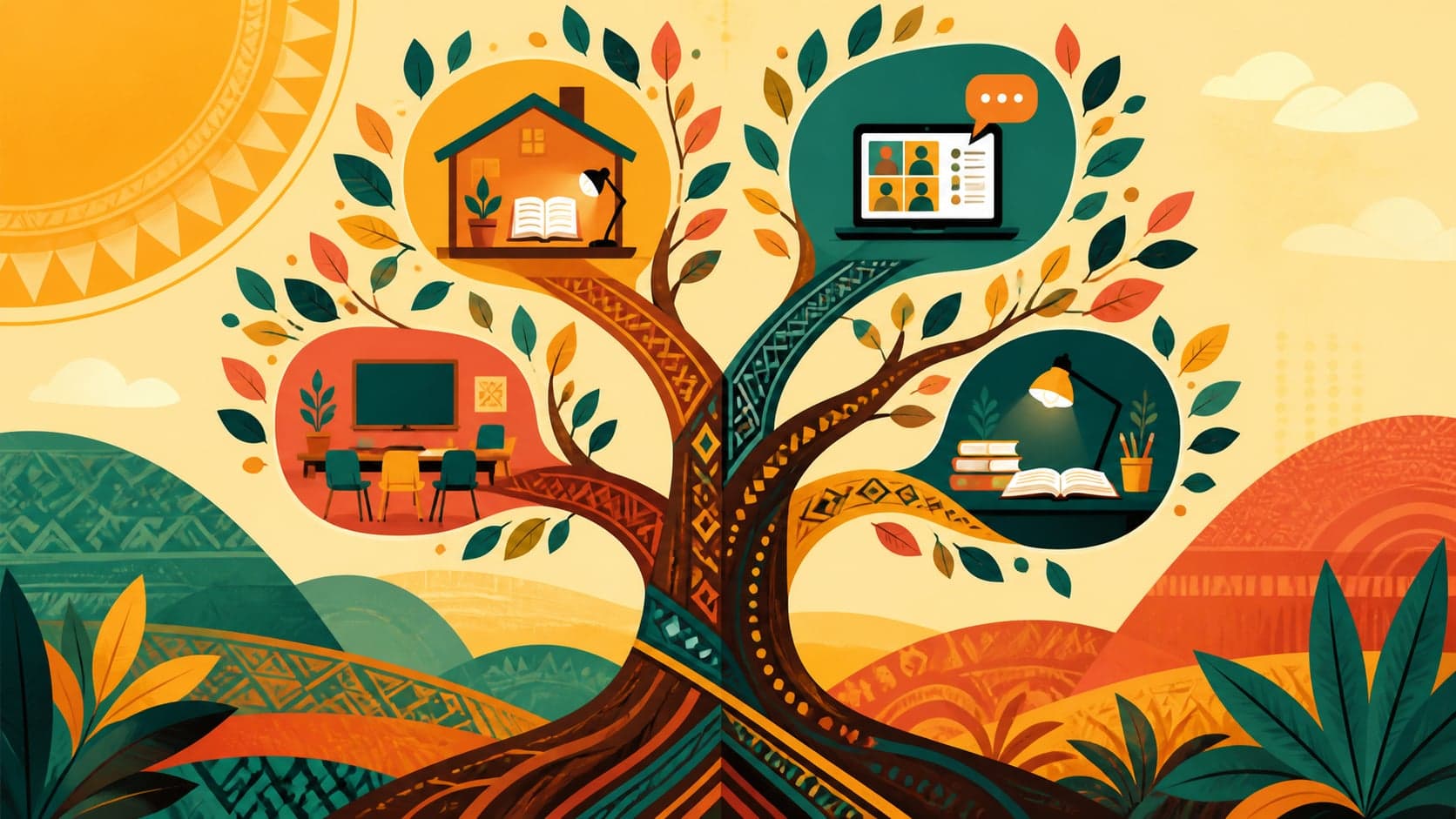
Education has changed dramatically over the last few years. Today, children can attend school from home, university students can earn degrees online, professionals can learn new skills after work, and families living anywhere in the world can access quality education with just a computer, tablet, or smartphone.
But here’s something many people don’t realize: Not all online schools are the same.
Some provide a complete school experience. Others help children revise after school. Some support homeschooling families, while others teach career skills or university programs.
Understanding the different types of online schools will help you choose the learning experience that best fits your needs.
What Is an Online School?
An online school is a learning institution or digital learning platform that delivers education through the internet instead of requiring learners to attend a physical classroom every day.
Depending on the type of online school, learners may:
- Attend live virtual classes
- Read or watch published lessons
- Complete assignments and assessments online
- Learn at their own pace
- Interact with teachers and classmates remotely
- Receive progress reports, certificates, or qualifications
Some online schools replace traditional schools completely, while others are designed to support classroom learning or homeschooling.
How Do Online Schools Work?
Although every online school is different, most follow a similar process. Learners typically:
- Enroll in a program or learning platform.
- Access lessons through a computer, tablet, or smartphone.
- Study independently or classes as part of a cohort.
- Complete assignments, quizzes, projects, or assessments.
- Receive feedback from teachers or tutors.
- Track their progress through reports or learner dashboards.
Many online schools also include discussion forums, collaboration spaces, messaging tools, and digital libraries that help learners stay connected and engaged.
Why Are Online Schools Becoming So Popular?
Families choose online learning for many reasons. Some want greater flexibility. Others need education while travelling, living abroad, or balancing work and family commitments. Some learners simply perform better in a personalized learning environment than in a traditional classroom.
Technology has made quality education more accessible than ever before, allowing learners to study almost anywhere while following structured learning programs.
What Are the Different Types of Online Schools?
Online education is not a one-size-fits-all. Different online schools are designed for different learners and educational goals.
Here are some of the most common types.
- Full-Time Online Schools (Virtual Schools)
A virtual school is a full-time online school that replaces the traditional classroom.
Learners follow a structured timetable, attend online lessons, complete assignments and sit assessments.
It is best for:
- Learners studying entirely online
- Families relocating frequently
- Children with health or mobility challenges
- Learners needing greater flexibility
- Homeschool Support Platforms
Homeschool support platforms are designed for parents who take primary responsibility for their children’s education.
Rather than replacing the parent, these platforms provide curriculum-aligned resources, assessments, progress tracking, teacher support, and learning tools that make homeschooling easier to manage. They are best for:
- Homeschooling families
- Independent learners
- Parents looking for structured learning support
What Is the Difference Between a Virtual School and Homeschooling?
The main difference between a virtual school and homeschooling is who takes responsibility for teaching.
In a virtual school, learners are enrolled in an online school where teachers deliver lessons, assess progress, and manage the learning program.
In homeschooling, parents or guardians remain responsible for their child’s education, although they may use digital learning platforms, tutors, or educational resources to support learning.
Many homeschooling families use online platforms to make learning more structured while remaining in control of their child’s education.
- Supplementary Learning Platforms
These platforms are designed to complement school rather than replace it. Learners use them to revise lessons, prepare for examinations, practice difficult topics, or build additional skills after school. They are ideal for:
- Homework support
- Revision
- Examination preparation
- Building competence in difficult subjects.
- Live Online Schools
Some learners enjoy learning alongside others. Live online schools deliver lessons in real time using virtual classrooms where learners interact directly with teachers and classmates. This creates an experience similar to attending a physical classroom while learning from anywhere. It is best for:
- Learners who enjoy structured routines
- Students who learn through discussion
- Families seeking a classroom-like experience online.
- Self-Paced Online Schools
What Is a Self-Paced Online School? A self-paced online school allows learners to study whenever it suits them instead of following fixed class schedules. Lessons are usually available on demand, allowing learners to move through the curriculum at their own speed. Some learners finish quickly, while others spend extra time mastering challenging topics. It is ideal for:
- Independent learners
- Adult learners
- Busy families
- Learners balancing education with work, sports or other activities.
- Blended (Hybrid) Schools
What Is Blended Learning? Blended learning, also called hybrid learning, combines online education with face-to-face learning. Learners complete some lessons online while attending selected classroom sessions, workshops, laboratories, or practical activities in person. This model combines the flexibility of online learning with the social interaction of classroom education. It is best for:
- Schools adopting digital learning
- Practical courses
- Learners who benefit from both online and classroom learning.
- Online Tutoring Schools
Sometimes learners only need help with one or two subjects. Online tutoring schools provide one-on-one or small-group teaching that helps learners strengthen weak areas, complete homework, or prepare for examinations. They are ideal for:
- Personalized support
- Examination preparation
- Improving academic performance.
- Microlearning Platforms
These platforms deliver education through short, focused learning experiences.
Instead of long lessons, learners complete bite-sized videos, quizzes, and activities that fit easily into busy schedules. They are best for
- Mobile learning
- Busy learners
- Continuous skills development
- Skills and Vocational Online Schools
Not every learner is studying for school examinations. Skills-based online schools focus on practical knowledge that prepares learners for careers, business, or entrepreneurship. Popular courses include:
- Programming
- Graphic design
- Hospitality
- Digital marketing
- Entrepreneurship
- Photography
- Video production
Skills-based online schools are best for:
- Career development
- Professional certification
- Lifelong learning
- Online Tertiary Institutions
Many universities and colleges around the world now offer complete Higher Education programs online. Students can study for certificates, diplomas, bachelor’s degrees, master’s degrees, and doctorates without relocating or attending campus every day. They are best for:
- Working professionals
- Adult learners
- International students
- Special Needs Online Schools
Every learner deserves an education that meets their unique needs. Special Needs Online Schools provide accessible learning materials, adaptive technologies, specialist support, and personalized learning plans for learners with disabilities or diverse special learning needs. They are best for:
- Learners with disabilities
- Families seeking individualized support
- Neurodiverse learners.
Neurodiverse learners are children or adults who learn, think, interact, or process information differently from what is considered typical. Some of these learners may have unique strengths, such as creativity, problem-solving, or exceptional memory, and may benefit from personalized teaching and learning support, tools, and environments that accommodates how they learn best.
Examples of neurodiverse learners include those with:
- Autism Spectrum Disorder (ASD)
- Attention-Deficit/Hyperactivity Disorder (ADHD)
- Dyslexia (difficulty with reading)
- Dyscalculia (difficulty with mathematics)
- Dysgraphia (difficulty with writing)
- Tourette syndrome
- Other neurological differences that affect learning or communication.
- Alternative Online Schools
Some learners need a different educational pathway. Alternative online schools offer flexible learning programs for learners returning to education, recovering credits, or pursuing gifted education. They are best for:
- Learners returning to school
- Gifted learners
- Students needing greater flexibility.
- International Online Schools
Are Online Schools Suitable for Children Living Abroad?
Yes. International online schools allow learners to continue studying recognized curricula regardless of where they live. Many families use these schools while relocating between countries or living overseas for work. Common curricula include:
- International Baccalaureate (IB)
- Cambridge International
- American Curriculum.
These schools help children continue learning without unnecessary interruptions.
- Publisher-Based Learning Platforms
What Is a Publisher-Based Learning Platform?
A publisher-based learning platform brings together educational content from multiple publishers and educators within one digital learning environment. Instead of offering only one school’s program, these platforms give learners, teachers, parents, and institutions access to a wide variety of curriculum-aligned lessons, videos, assessments, worksheets, revision materials, and teaching resources. This allows users to choose learning content that best matches their curriculum, learning goals, and preferred teaching style. They are ideal for:
- Educational institutions
- Teachers
- Homeschooling families
- Independent learners.
How Do I Choose the Right Online School?
The right online school depends on your goals. Ask yourself a few simple questions.
- Do you need a full-time school or extra learning support?
- Do you prefer live classes or self-paced learning?
- Are you homeschooling your child?
- Does your child need personalized support?
- Are you preparing for examinations?
- Are you looking for career skills or university qualifications?
- Do you need nationally recognized certification?
- Will your child be learning while living abroad?
The clearer your goals, the easier it becomes to choose the right learning model.
Can Online Schools Replace Traditional Schools?
Sometimes they can, and sometimes they are designed to work alongside them. Full-time virtual schools can replace traditional schools for many learners by providing structured teaching, assessments, and recognized qualifications.
Other online schools serve different purposes, such as supporting homeschooling, providing tutoring, helping with revision, or delivering professional skills.
Rather than replacing traditional education entirely, online learning gives families more flexibility and more choices.
Where Elymica Fits
Elymica is a comprehensive digital learning ecosystem that supports multiple ways of learning within one connected platform. Rather than limiting learners to a single educational model, Elymica brings together publishers, educational institutions, teachers, parents, and learners to support different learning journeys.
Elymica can support:
- Formal, informal and non-formal learning programs
- Homeschooling
- Supplementary learning
- Self-paced learning
- Blended learning
- Teacher-led instruction
- Publisher-driven content
- Collaborative learning communities
This flexibility allows schools, families, and educators to create learning experiences that meet the needs of every learner.
The Future of Learning Is About Choice
Education is no longer limited to one classroom or one way of learning. Today’s learners have more opportunities than ever before. Parents can choose learning experiences that match their children’s needs, teachers can reach learners beyond school walls, and educational publishers can make quality resources available to people around the world.
The future of education is about flexibility, accessibility, and personalization.
Understanding the different types of online schools is the first step toward making confident educational choices. Whether you are a parent choosing a school, a learner exploring new opportunities, or an educator embracing digital learning, the right online learning experience can open doors to lifelong success.
Written by Elymica Editorial · Editorial Team
← More from the Journal