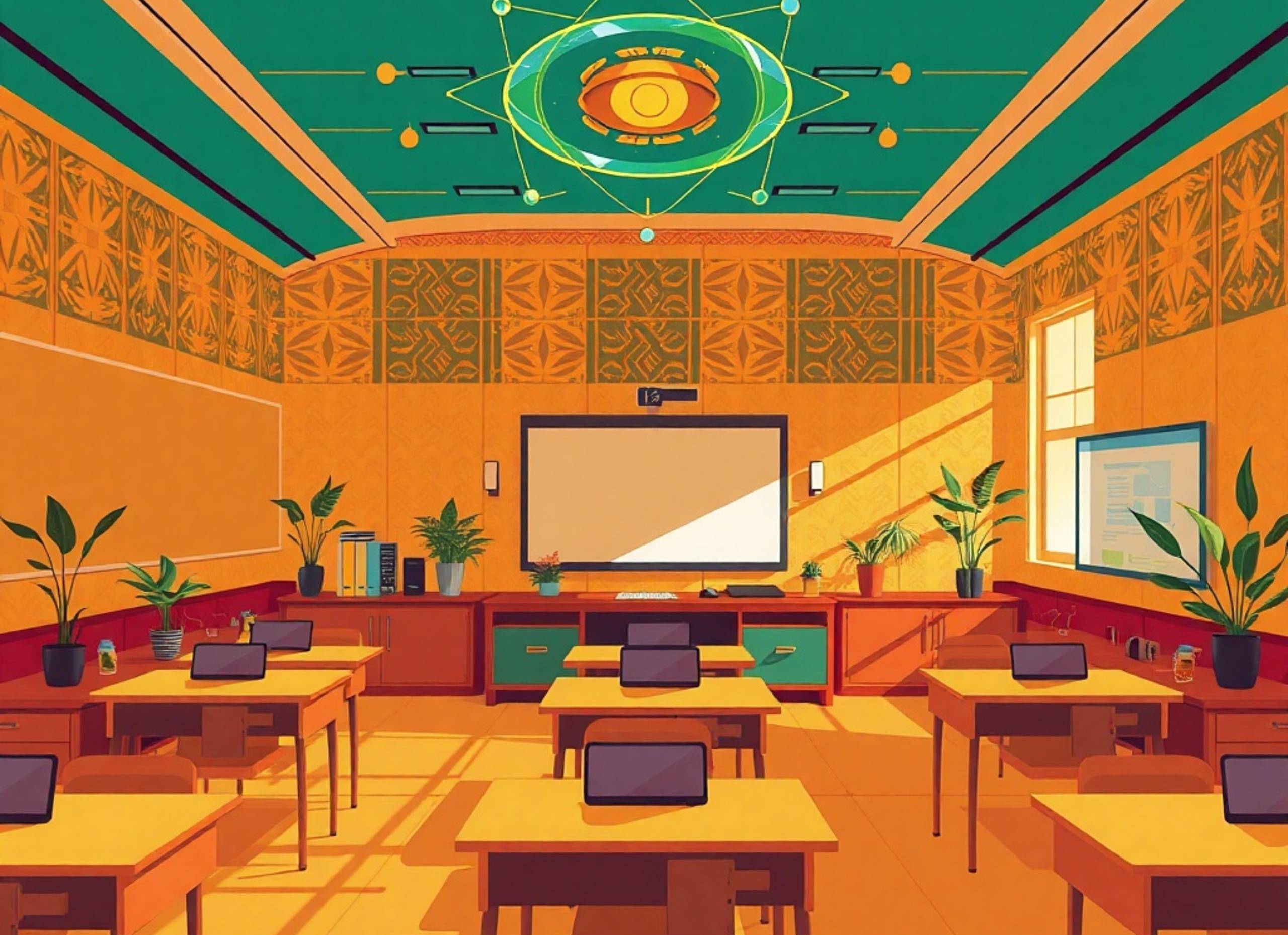
The Future Classroom: What Learning Will Look Like in 2030s
Close your eyes for a moment and imagine a classroom in the year 2030.
Not the classroom you grew up in. Not rows of desks. Not dusty chalkboards. Not the same old routine.
Imagine a classroom that feels alive, smart, connected, and designed for every type of learner. A classroom where children learn faster, teachers teach easier, and every student, no matter where they live, gets a fair chance to succeed.
This is not science fiction. This is where the world is heading. And that future of learning is closer than we think.
Learning will be personalized- like having a smart tutor for every child
In 2030, every learner will have access to digital tools that understand their pace, strengths, and needs.
Imagine:
A math lesson that becomes easier or harder depending on how well you are doing.
A reading app that helps you pronounce difficult words.
A science platform that shows you animations instead of long, confusing text.
Every child will learn in their own way, not the same way. This means fewer children left behind, and more children discovering what they are truly good at.
Teachers will be super-powered, not replaced
Many people fear technology might replace teachers. It won’t. In 2030, teachers will have more power, not less.
Imagine teachers having:
Instant feedback on which student needs help
Tools that mark assignments automatically
Lessons that prepare themselves
Data that shows exactly where the class is struggling.
This frees teachers from endless paperwork and gives them more time for what truly matters – connecting with students, offering support, and inspiring confidence.
The best classrooms in 2030 will be powered by technology, but led by humans.
Learning will happen anywhere – not only inside a building
The future classroom won’t have walls. Children will learn:
At home
In buses
In hospitals
In remote villages
On their phones
On low-cost tablets
Even offline when the internet is weak.
This flexibility means no child has to stop learning because of weather, sickness, distance, or crisis. Learning will follow the child, not the other way around.
Students will learn skills we can’t ignore anymore
By 2030, the world won’t reward memorization. It will reward skills like:
Creativity
Problem-solving
Communication
Digital literacy
Coding
Critical thinking
Teamwork
Adaptability.
These skills will become as important as reading and math.
Imagine classrooms full of activities where students build things, solve problems, collaborate, and create real solutions – not just copy notes.
Technology will make learning more fun, not more stressful
Picture this:
Virtual labs where you can do science experiments safely
Augmented reality that lets you explore planets or cells in 3D
AI assistants that explain homework
Gamified lessons that turn learning into a challenge or adventure.
Learning will be interactive, not boring. Children will be curious, not afraid. And teachers will have endless creative ways to make lessons exciting.
Every child will have a fair chance—no matter where they are born
Right now, millions of children cannot access quality education because of poverty, distance, or weak school systems.
By 2030, digital learning will break these barriers. Affordable devices, online platforms, and smart content will give every child, whether in a city or a remote village, access to the same knowledge.
This is the true power of the future classroom: fairness. For the first time in history, the world can educate every child equally. That is the kind of future worth building.
Schools will be centers of connection, not just buildings of lessons
Students will still go to school, but for different reasons:
To collaborate
To socialize
To create
To ask questions
To receive emotional support
To build friendships and confidence.
Schools will become community hubs, not just places to sit and memorize facts.
Reflection
The future classroom of 2030 is bright, modern, and full of possibilities. But we don’t have to wait for 2030 to start building it. The tools are already here. The world is already moving. What children learn today will shape the jobs, inventions, and solutions of tomorrow. Parents, teachers, and communities have an opportunity, and a responsibility, to prepare them.
The future of learning is about expanding the possible. And if we do it right, the classroom of 2030 will bring out the best in every child, everywhere.
Written by Elymica Editorial · Editorial Team
← More from the Journal